

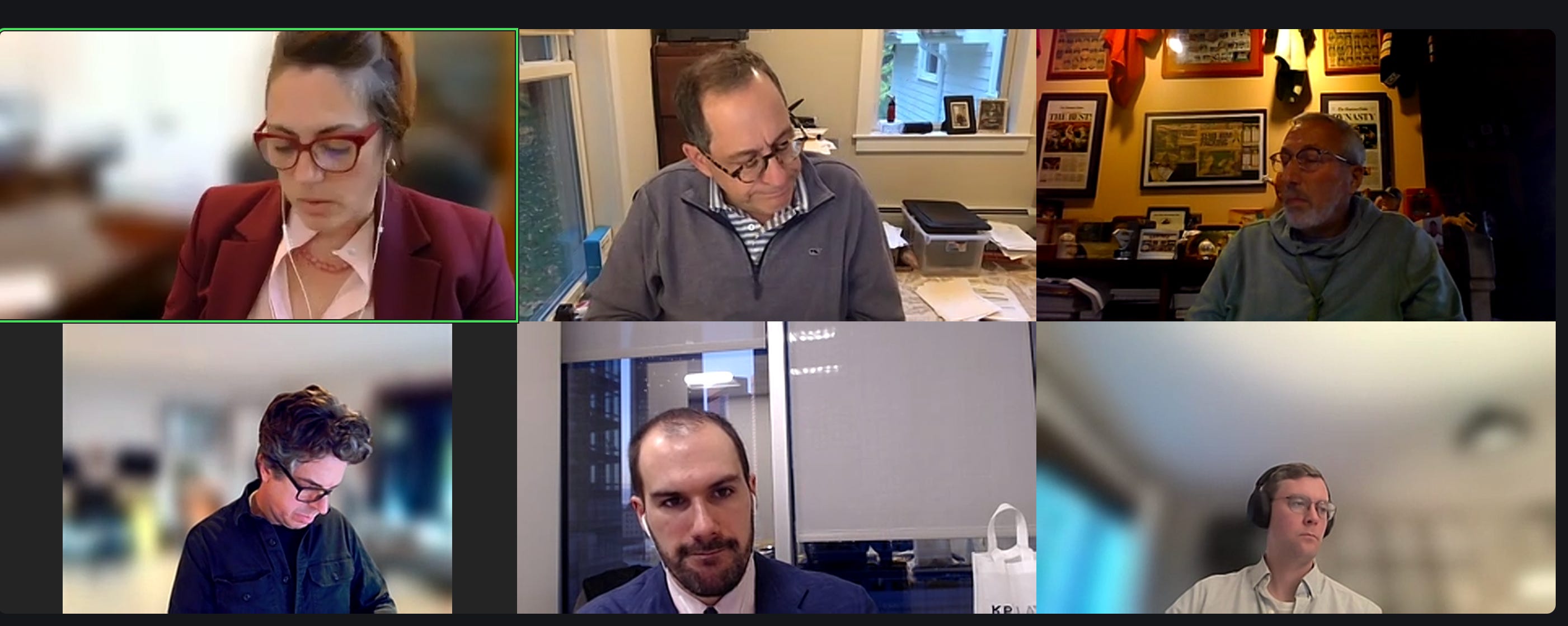
After a lengthy presentation by Town Manager Liz Hartgrove and an extended discussion among Selectboard members and town counsel, the Great Barrington Selectboard voted unanimously, 5-0, to declare a water emergency in response to the escalating crisis with Housatonic Water Works Company and threat of a water turn-off.
According to owner Jim Mercer, HWW’s dire financial state makes it unable to pay overdue bills totaling more than $116,000 (and accumulating daily) for the emergency water hook-up HWW has used to connect to the Great Barrington Fire District water supply. The connection was put in place last year to make up for inadequate water pressure from HWW’s own water source to serve their 850-odd ratepaying customers.
Hartsgrove had sent a 12-page memo to board members before the meeting, and she reviewed it publicly to set the stage for the vote, stressing in particular several things that the declaration does not do or mean.
It does not mean water service has stopped.
It does not issue a drinking-water advisory.
It does not transfer responsibility for the privately owned system to the town.
It does not compel HWW to act. That power belongs to the Board of Health, under Chapter 111, or to the governor.
The primary purpose of the emergency declaration, she said, is precautionary. It’s a way to prepare for changes in drinking water availability.
KP law attorney Michael D’Ortenzio stressed the legal effect of the declaration, which is to enable spending authority, and he affirmed that in his opinion the board had the authority to make it, given the expressed threat of a water turn-off.
“What you’re empowered to do, again, is to authorize expenditures absent an appropriation and to speak for the town to third parties.”
The funding made available is a USDA Project Planning Grant, but that is the only USDA funding available while the town doesn’t own the utility. She also explained that a declaration, rather than resolution, was a stronger statement, and would place the town in a better position vis a vis the USDA funds.
Selectboard member Phil Orenstein said the limited extent of the emergency powers left him “underwhelemed.”
“I have to say my biggest concern is it doesn’t do much for us…this doesn’t advance the ball.” That said, however,he didn’t see any reason not to vote yes.
Ben Elliot, a HWW ratepayer himself, said the declaration was a step to move things in the right direction, and to "communicate how the board views the situation,” which he described as “a “slow-moving car crash about to fall off a cliff.”
The board, he concluded, needed, “to call this what it is - an emergency.”
Vice Chair Eric Gabriel reiterated the same sentiments.
“Being a rate payer we’ve been living in survival mode for so long it’s just another day. But after being at the Fire District meeting behind the owner where he says he’s in crisis, that puts a whole new level of worry in a ratepayers mind. You worry if you’re voing to have water at all. I don’t think we have much of a choice…..Things are unraveling fast.”
Chair Steve Bannon felt that calling it an emergency was appropriate because a health emergency could be imminent if the Fire District turned off the water. He said, “I think this is a proactive thing for us to do.” He stressed that he wanted the public to understand the board’s reasoning behind the vote, and that it’s the prudent move to take, given “the path we’re heading down.”
Later in the meeting, when it came time to make a motion, Bannon proposed adopting the draft with two changes:
Emergency procurement should go to the Selectboard in a public meeting.
The declaration references the board’s earlier letter asking the governor to declare a state emergency.
Garfield Reed encouraged action and added that there had been more than adequate reviews. “We’ve reviewed ‘til the cows come home. Let’s get moving.”
Hartsgrove said the Board of Health should be part of the town’s preparedness strategy and kept informed of developments, and that the Selectboard should review the declaration regularly. She also said HWW’s reliance on fire district water has created “vulnerabilities” for the district and its customers.
“This is not just about one district, but multiple districts, and the chain reaction of the dependency,” she said.
So the Town Manager ends tonight’s story where it began, with the most salient point to be made about the situation with Housatonic and its water:
“This declaration does not resolve the underlying problems with HWW.”
Context for tonight’s vote:
The pivotal meeting which set the stage for tonight’s vote took place on September 23, when HWW president Jim Mercer told the prudential committee members he could pay just $3,000 of the bill, and GBFD’s Will Brinker threatened to turn off the water.
On September 30 the public learned that they’d abandoned the long-promised managanese treatment plant. DPU had approved a 90% rate increase over five years for ratepayers contingent on the completion of that plant, but Mercer’s letter to the GBFD insisted the company would require a further rate hike in order to continuing providing water.
At the October 6 GBFD meeting Commissioners voted to keep the water on until November 4th, provided HWW paid at least $10,000 of their outstanding bills by October 8th and made another payment in early November. At that meeting Representative Leigh Davis promised that the state’s Attorney General’s office, as well as that of the Lieutenant Governor and Governor, were taking an “all hands on deck” approach to solving the crisis, which would impact about 850 water customers in Housatonic, West Stockbridge and Stockbridge.
After the Oct 6 meeting Steve Bannon and Eric Gabriel publicly stated their frustration with the pace of progress in open letters to Governor Healey and other state officials urging them to hold HWW accountable. An “angry” Eric Gabriel asked where the money went, why the treatment plant was not completed and other promised improvements have been delayed, why was the $100,000 in debt allowed to accumulate, and why anyone would believe that another rate increase would solve the company’s problems.
Bannon, for his part, thanked Gabriel, and urged state officials to “help us finish what should have been finished years ago.”
As of October 14 there’s been no movement from state officials.
GBFD next meets on Tuesday, October 20th.