

THIS DOCUMENT WAS PRODUCED WITH CLAUDE AI WITH A TRANSCRIPT PROVIDED BY CTSB TV, AND HAS BEEN CORRECTED, EDITED AND AUGMENTED.
Corrections may be included in comments below or sent to 413villagegreen@gmail.com.
Link to CTSBTV Video
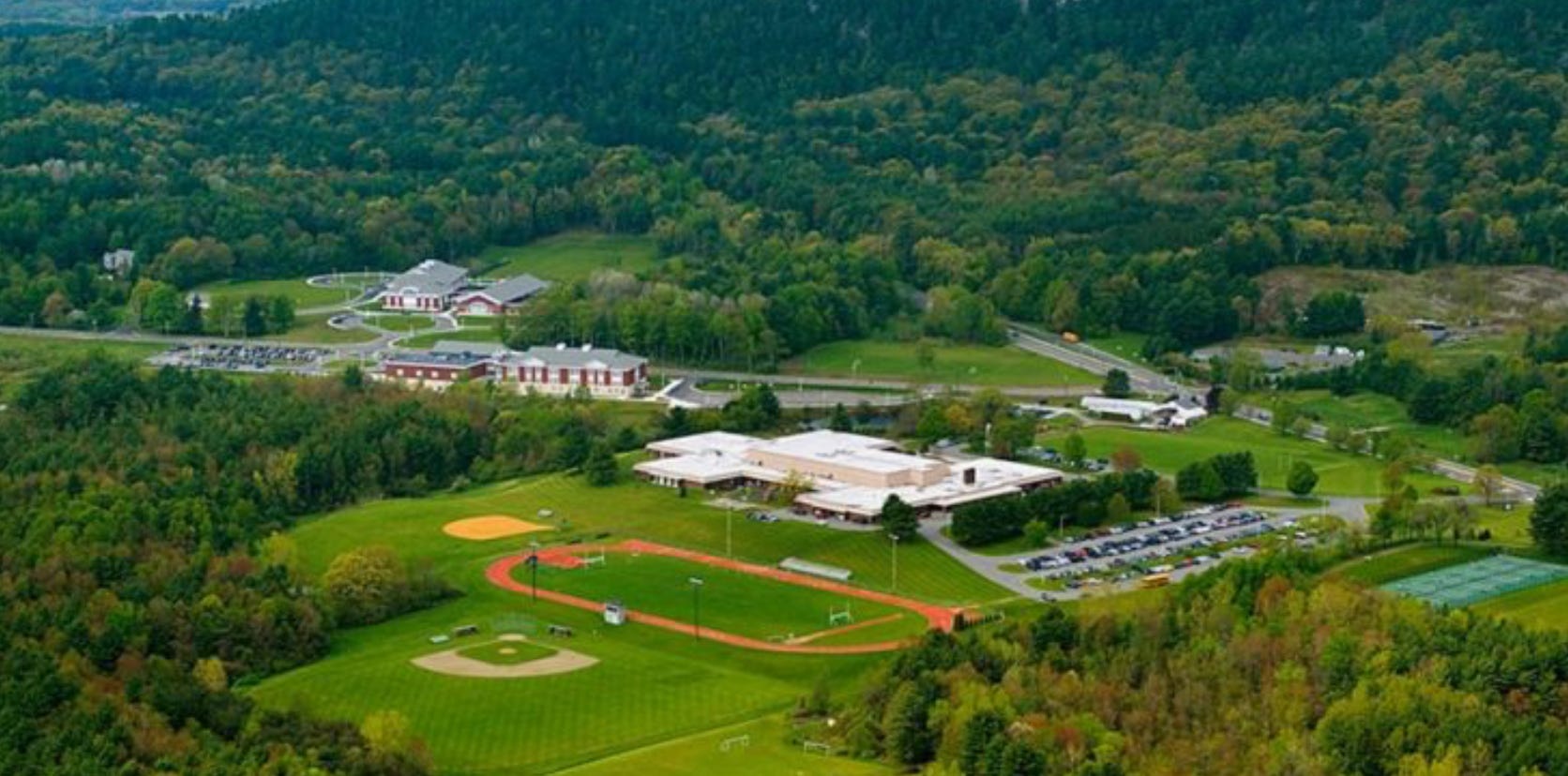
The Berkshire Hills Regional School District School Committee sets policy and the budget for the schools serving Great Barrington, Stockbridge and West Stockbridge.
Those schools are Muddy Brook Elementary, Du Bois Regional Middle School and Monument Mountain Regional High School. School spending is the largest single item in each town’s budget.
Three candidates appeared at a public forum on Monday, October 13, moderated by former School Committee member Bill Vogt: Sarah Tonetti, Bill Fields and Jason St. Peter. A fourth candidate, chair since 1999 Stephen Bannon, sent a statement that was read aloud.
The candidates
Stephen Bannon (incumbent, chair) missed the forum because of a Community Preservation Committee meeting. Bannon was appointed in 1997, has been re-elected every four years since 1998, and has chaired the committee since 1999. In his statement he said, “I believe our schools are at their best when the students remain at the center of every decision.” He pledged to support “responsible stewardship of taxpayer dollars” and safe, supportive schools.
Sarah Tonetti (Stockbridge, incumbent) is the committee’s newest member. She has two children at Monument, a freshman and a senior, and moved to the Berkshires from New York City 18 years ago. Her father was the first in his family to go to college, and she said “quality public education changed the trajectory of my life.” She is not on the ballotbecause not enough of her nomination signatures were verified. She is running as a write-in candidate.
Bill Fields (Housatonic, incumbent) taught social studies in the district from 1969 to 2009 and has served on the committee since 2014.
He first ran because he had “had enough of standardized testing.” He won his last race as a write-in. He is running again mainly to see the new Monument Mountain building project through, as he believes, “You don’t leave a job undone.”
Jason St. Peter (Stockbridge, incumbent) is a 1989 Monument graduate and the son of two public school educators. He is seeking a fourth term. He chairs the high school building committee, and his priority is finishing the project “as far under budget as possible” while limiting disruption for students. His own two high schoolers “will only have negative impacts because they will be going to high school through a construction zone.”
Where they stand
On MCAS and math scores. Jan Wojcik opened by noting that the state’s September 22 accountability report flagged Berkshire Hills as needing focused or targeted support. He also said the district’s MCAS math scores have trailed the state average since 2019. The three candidates split.
Fields rejected MCAS as a measure: “If you look at the zip code, you can know what the score is going to be.” He called the test “one indicator. It is not the indicator.” He said the district’s AP results rank 12th in the state for its size.
St. Peter called himself “kind of an anti-Bill” on testing. He values test scores but thinks MCAS is flawed. “We don’t teach to the test,” he said. He would support a 12th-grade exit exam like New York’s Regents.
Tonetti called MCAS “one of many tools” and said math is “most certainly an area of focus.” She asked voters to weigh the district’s demographics, including English language learners and students who need extra support.
All three said it is too early to judge the new math curriculum. Fields pointed to the new K-4 reading program, Fishtank, and noted that teachers chose it themselves.
On increases in taxes and the budget generally. Asked by Vogt how to control school spending, the candidates mostly pointed to costs outside the committee’s control.
St. Peter said the answer lies at the state level and called the funding formula “inadequate, and more funds need to come from the state.” He said about 75% of costs are for people, and health care keeps rising. “If you want a good education, a quality public school education, you’re going to have to pay for it.”
Tonetti said much of the budget is “already spoken for.” She added: “We share your concern. I don’t want to see my taxes continue to go up. It stresses me out. I got two kids going to college.”
Fields cited special education requirements and related costs, including more than $1 million for out-of-district transportation. He also cited health insurance costs, which went up 14% this budget year. He said the state’s rural aid formula is under review, with a report due to the Legislature in January. He defended school choice as “a real plus,” culturally and financially, calling the $5,000 figure that’s cited as “a red herring.”
On declining enrollment and consolidation: Atwood argued that enrollment has fallen by about half since 1970 — from about 2,750 to 1,086 in 2026.
In response to a question from Wojcik about declining numbers, St. Peter said the original Monument was designed for more than 700 students, and the new building for fewer than 500. “It’s about 60% of the old Monument.”
As for merging/ consolidating, “We’re all in agreement” that it’s a good idea.
Fields predicted the new school would push Southern Berkshire and Lee toward a “re-evaluation.” His summary: “If you build it, they will come.” He predicted that the new building would force a reckoning with the “fiscal realities” for the Lee and Southern Berkshire districts.
On absenteeism and the damage wrought by COVID shutdowns. Tonetti called chronic absence a national problem, often rooted in families dealing with mental health or addiction. “You can’t learn if you’re not there,” she said. St. Peter was the bluntest: “We basically sacrificed our young by shutting things down” with remote learning. Fields relayed a veteran Monument teacher’s view that, after the return, students “didn’t know how to be students.”
On staffing concerns. Fields warned that 7 to 10 Monument staff could retire in the next three years, while enrollment in teacher education programs is falling. “Who’s going to fill that void?”
Tracking Student Success after BRHSD: Residents pressed the candidates on whether the district tracks how graduates fare in college and the work world. The candidates said guidance counselors send self-reported, follow-up surveys to graduates, but none could say how many graduates respond, and the results have never been formally presented to the committee. Buddy Atwood raised the question and John Breasted, a former Monument tutor, followed up, summing up the answer as “we don’t know” and “we haven’t discussed it.”
Fields said the committee received a five-year list of graduates’ colleges about a year and a half ago.1
The forum ended abruptly. When the moderator called time at the one-hour mark, Breasted objected that the event “was not advertised as a time-limited meeting.” Breasted continued to argue that Lee schools kept students in classrooms during COVID on an alternating hybrid schedule. Tonetti replied that the district “did the best given the information” at the time.
The candidates invited voters to bring follow-up questions to regular School Committee meetings.
The next BHRSD School Committee meeting is Thursday, October 29th.
Note that the state does its own tracking of post-graduate outcomes in terms of income, for students who remain in-state.