

THIS DOCUMENT WAS PRODUCED WITH CLAUDE AI WITH A TRANSCRIPT PROVIDED BY CTSB TV, AND HAS BEEN CORRECTED, EDITED AND AUGMENTED.
Corrections may be included in comments below or sent to info@villagegreennews.com.
LINK to CTSB TV video of meeting.
*
Highlights
Cook’s Garage fallout dominates. Michelle Loubert said she was “angry” that voters approved $500,000 from the capital stabilization fund at the special town meeting without asking how the building deteriorated.
She said she was never told, while serving on the committee when the town took the property, that it couldn’t be insured. She asked for a list of every town-owned building with its insurance status, plus quarterly spending reports on Cook’s Garage.
Ambulance contract dispute. The Southern Berkshire Ambulance Squad and town officials disagree on whether the town’s new contract with the squad already covers the cost of ambulances.
If it does, the roughly $47,000 that voters approved by citizen petition at the special town meeting duplicated money already in the contract. If it doesn’t, the squad may return with similar requests each year.
Member Reo Matsuzaki commented on the conflict, “I think this needs to really be clarified… I don’t want to be in a position where every year we’re going to have to go through a citizens petition. Let’s just figure this out, and if it’s in, it’s in. If it’s out, it’s out. And then we have to find a way to fund it.”
Members agreed they wanted to see the contract to get to the bottom of the dispute.
Budget process wish list. Before the first FY2028 joint budget session on Nov. 17, members called for shorter, more focused materials, 5–10 year trend lines, department vehicle inventories in advance, and materials projected on screen for the public.
School assessment formula raised. Doug Robbins asked for a road map to recalibrate how Great Barrington’s share of the BHRSD budget is calculated. Reo Matsuzaki explained why the bar to change it is high.
New meeting schedule. First Wednesday of each month, starting Dec. 2.
Details:
Cook’s Garage: “the how and the why” [16:13–30:57]
Loubert, who said she watched the special town meeting from an airplane, opened the recap with sharp criticism. She said she grew up in Housatonic and lived a few doors from Cook’s Garage for 15 years. When the town took over the property, she said, she never heard that it couldn’t be insured, and no paperwork she reviewed said it was at risk of collapse. She said the first time she heard about the insurance problem was when Assistant Town Manager Christopher Rembold raised it at a meeting, and that this was never disclosed to the public. Shoring up the structure would have cost “a fraction” of the current bill, she argued.
“If we don’t know the how and the why, we can’t fix future problems,” Loubert said.
Robbins agreed the collapse signals a broader management problem and asked for “the list of other pending disasters.” He also wanted a professional assessment of each building’s condition, not just its insurance. “If Cook’s Garage had been sold two years ago, we wouldn’t be having the problem we’re having now,” he said. He reported that during a site visit, Kate Van Olst agreed that 90-day spending reports were feasible.
Matsuzaki urged caution about implying staff negligence before the facts are known. He said the joint meeting record shows the town was preparing to market the property when record rainfall brought the roof down. He also noted that Town Manager Liz Hartsgrove already agreed at the last joint meeting to provide an insurance inventory. He wants periodic reviews of the $500,000 so unspent money can go back to the stabilization fund, and he asked what the town’s strategy is for selling properties it doesn’t use.
Rothenberg said the process worked as designed. The committee debated, voted, and reported to town meeting, and any voter could have amended the article from the floor. He said he would rather look forward than backward.
Outcome: No vote was taken. Meagher will email the town manager asking for the inventory, the insurance status of each building, and quarterly Cook’s Garage reports. Loubert said she wants the report before the next meeting.
Ambulance: two readings of one contract [47:30–50:48]
Robbins said he had assumed the new Southern Berkshire Ambulance contract covered both operations and equipment, so the roughly $47,000 citizen petition approved at town meeting shouldn’t recur. Matsuzaki said Hartsgrove and Select Board Chair Steve Bannon both told him capital costs were included in the negotiated amount. The petitioner, who also sits on the ambulance board, disagrees. Matsuzaki said the question needs to be settled so the issue doesn’t come back as a petition every year. He also argued that citizen petitions only ever add spending and never cut it.
Robbins said John Halbreich of the ambulance service’s finance committee, has asked to appear before the committee. Robbins wants members to review the contract first.
Shaping the FY2028 budget process [50:55–1:15:10]
Rothenberg said the committee is “in a deep fiscal crisis that is likely going to get worse before it gets better.” His proposed rule: “If something can be explained in a paragraph, don’t explain it in a page.” He asked staff to tell the committee in advance what they need it to focus on. “I’m not the town accountant. I’m not the town’s lawyer,” he said, calling the committee “largely an advisory board” at risk of being “buried in information.”
Loubert pushed back. She said last year’s thick binder reflected the fiscal crisis, and that new members shouldn’t redesign a process they haven’t been through yet. She asked that materials be projected on screen so the audience can follow along.
Meagher wants department inventories, especially vehicles, before departments make their requests. She cited a past request for a $200,000 excavator and called for more shared services. Matsuzaki proposed a “nested” budget document: a simple summary page for residents, then the spreadsheets, then backup appendices. He also asked for 5–10 year trend lines. Robbins, who is new, asked for a clear list of what he should be reviewing.
School assessment formula [1:20:05–1:26:46]
Robbins raised a presentation by Patrick White. Robbins said about 75% of the town’s budget goes to the schools, and that assessing by land value could cut Great Barrington’s share to 52–54%. Members disputed whether the formula was ever wealth-based.
Matsuzaki said a change requires either six votes on the school committee (Great Barrington holds five seats, Stockbridge three, West Stockbridge two) or petitions from what he believes is 10% of voters in each town. He said he was unsure of that percentage. Meagher said Bannon suggested inviting Superintendent Peter Dillon for a conversation. Matsuzaki also noted that the state Foundation Budget Review Commission is examining school choice reimbursement, and called the school budget unsustainable without state help.
Other business
Financial reports [4:33–14:13]: Members reviewed year-to-date reports through September from the town accountant. Lines including legal fees and technology are already at or over 100%, which members called expected early in the year. Loubert noted that opening balances were missing. Questions about the South County Connector accounts, now a town department, were referred to the accountant. Members agreed she should attend future meetings.
Citizen agenda requests: Loubert asked for a procedure letting residents request agenda items during Citizens Speak.
Disappointing Turnout to Special Town Meeting: Members cited 161 voters at the special town meeting, against Matsuzaki’s rough estimate of 4,000 eligible.
“You have a duty to show up,” Rothenberg said.
Town meeting rationales [1:40:39–1:47:07]: Rothenberg proposed short written explanations of the committee’s votes, with dissents, modeled on Supreme Court opinions. Matsuzaki supported the idea. Loubert worried about late-night drafting and review deadlines. Meagher will raise it with Hartsgrove and Bannon.
Public comment (Citizens Speak)
Lynn Nemek, Housatonic, a new voter, said she voted for the $500,000 because voters were told a collapse into the river would cost far more.
“The who and the why doesn’t matter at this point. It’s done. It’s over. It’s a disaster… You have to vote for what is now….I do feel that we’re not getting sometimes enough information or the right information….It wasn’t explained. Maybe I wouldn’t have voted for that $500,000 if I’d had more information…I’m trying, I’m learning.”
James Garzon, said “vote now or it’ll cost more” framing drives approvals, said his combined tax and sewer bill tops $8,000, and warned that seniors and stretched residents are being pushed out in favor of second-home owners.
Vivian Orlowski, warned that health premiums are projected to rise more than 9% and urged the town and school district to explore innovative plans. Loubert replied that union bargaining and the Berkshire County Health Group limit flexibility.
Vivian, again, urged restoring town email addresses for individual board members.
Eileen Mooney said finance committee members were once routinely questioned at town meeting about their votes.
Next steps
Nov. 17: joint meeting with the Select Board (first budget session).
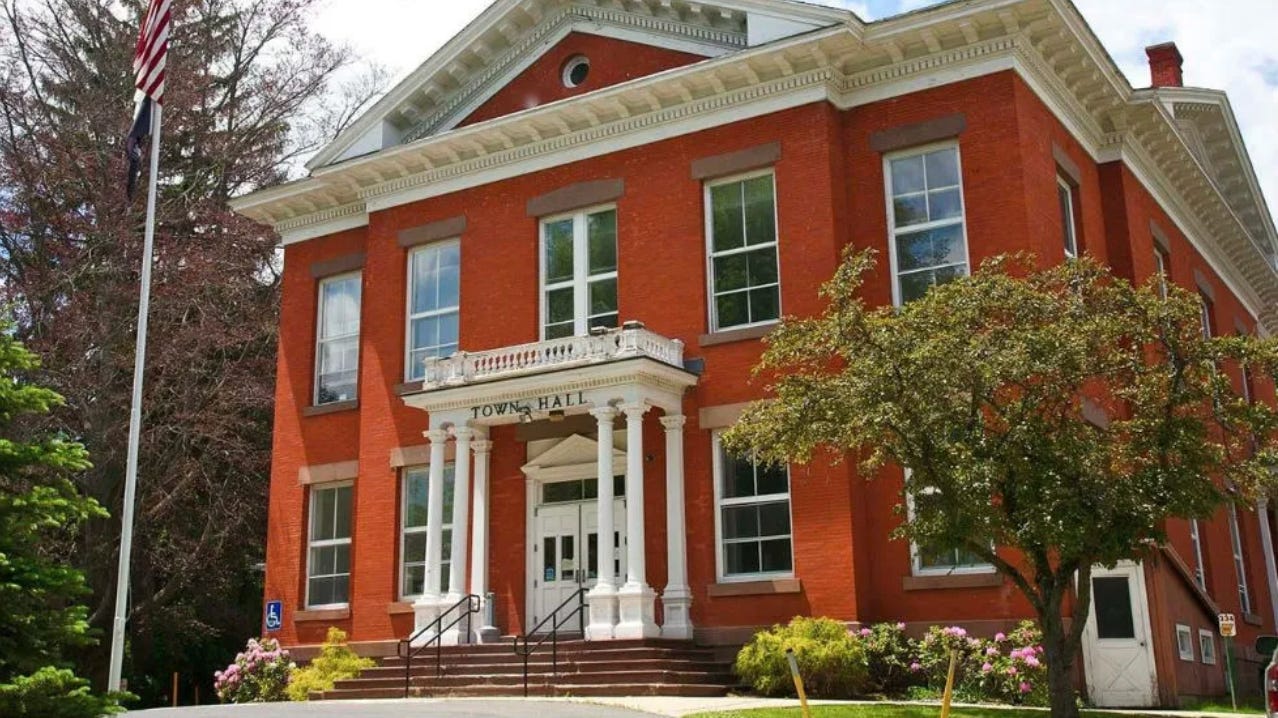
Dec. 2: first regular first-Wednesday meeting (5 p.m., town hall preferred).
January exception: Jan. 13 (second Wednesday).
Meagher will send the schedule to the town manager.
Adjourned unanimously at 7:56 p.m.